D - Law 12 - Today we will spend a bit of time looking at the divisions of civil law (Intentional Torts, Strict Liability, and Negligence) and understand the differences between criminal and civil law (look at page 269 for help). Next you'll have some questions about next friend, summons, discovery, statement of defense, and judgments (questions 1, 2, 3, 4, 6, & 7 on page 273).
C - Introduction to Law 9/10 -

Today, you're going to get fingerprinted. We will all get one set of fingers (and thumb) on one hand fingerprinted (our non dominant hand) by using graphite pencils and scotch tape. You will need to identify whether or not your prints are loops, arches, or whorls and then place them up on the blackboard. We will then count up the total number of loops, arches, and whorls for each finger (and thumb) for the class and graph the data.

A - Social Studies 11 - Over the next two days we will finish our look at the Cold War. Just a note of interest...North Korea conducted a test by detonating a nuclear bomb on May 25th of this year so we'll finish the Atomic Cafe video in class to get an idea of the fear and paranoia that existed in the cold war world. ( for more on North Korea's test and their nuclear program check out the article from the British paper "The Telegraph" here or the Associated Press article here). We'll take a look at Canada's role in the post-Vietnam world in two sections - the Trudeau Era and the Mulroney Era. We'll look at NORAD, CIDA, la Francophonie, SALT, SDI, FIRA, FTA, NAFTA, Glasnost, Perestroika and the end of the Cold War. You'll need to work on questions 2, 3, and 4 from page 150 from the Counterpoints textbook today.
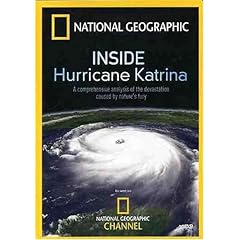
B - Geography 12 - Today we are going to look at hurricanes. We'll look at the conditions necessary for hurricane development and then look at the Saffir-Simpson scale (wind speed, storm surge, and damage to structures). Your activity will be to track (plot out the path) of Hurricane Diana from 1984 and answer two questions (including question 18 from page 248 of your Geosystems text). We'll spend the rest of the class watching National Geographic's Inside Hurricane Katrina. The tragedy of Hurricane Katrina is very personal to me. Although I was not directly impacted by the hurricane (I did not lose loved ones; nor did I lose property in the storm) my wife and I were married on August 5, 2005 just north of New Orleans. We spent time talking with the people of New Orleans and making friends there. We traveled the Gulf Shores road (Highway 90) through Pass Christian, Bay St. Louis, Long Beach, and Gulfport. Three weeks later after a clear warning from the director of the National Hurricane Center, Dr. Max Mayfield, Katrina made landfall along the border between Louisiana and Mississippi. Now it wasn't as if politicians didn't know about the potential disaster that could befall New Orleans if a major hurricane was to strike. Dr. Ivor van Heerden ran a simulation (Hurricane Pam) the previous year at Louisiana State University. His test results were provided to FEMA, state, and local officials. People knew. People in power knew. Heck, I even knew and I'm just a geography teacher living on the opposite end of the continent. The DVD asks some hard questions and I hope to begin a lively discussion with you about them.

CNN Special: Hurricane Katrina
NOAA: Hurricane Katrina
BBC: Hurricane Katrina
NOLA: Hurricane Katrina
NOVA Science Now: Hurricane Katrina

No comments:
Post a Comment